Sport fishing in Costa Rica combines world class offshore species, modern boats, and professional techniques designed to maximize both performance and conservation. From sailfish and marlin to roosterfish and tuna, the type of boat, gear, and technique used depends on the fishery, target species, and conditions.
A Country Built for Sport Fishing
Costa Rica is recognized as one of the most consistent sport fishing destinations in the world. Its location on the Eastern Pacific gives anglers access to a rich variety of species, stable weather windows, and productive offshore grounds that remain active year round.
Behind this reputation is a combination of three elements: the boats used to reach the fish, the gear that supports the experience, and the techniques developed over decades by local captains and crews.
Types of Boats Used in Costa Rica
Boats are selected based on the type of fishing being done. Sport fishing in Costa Rica generally takes place in three main environments, each with its own preferred vessel.
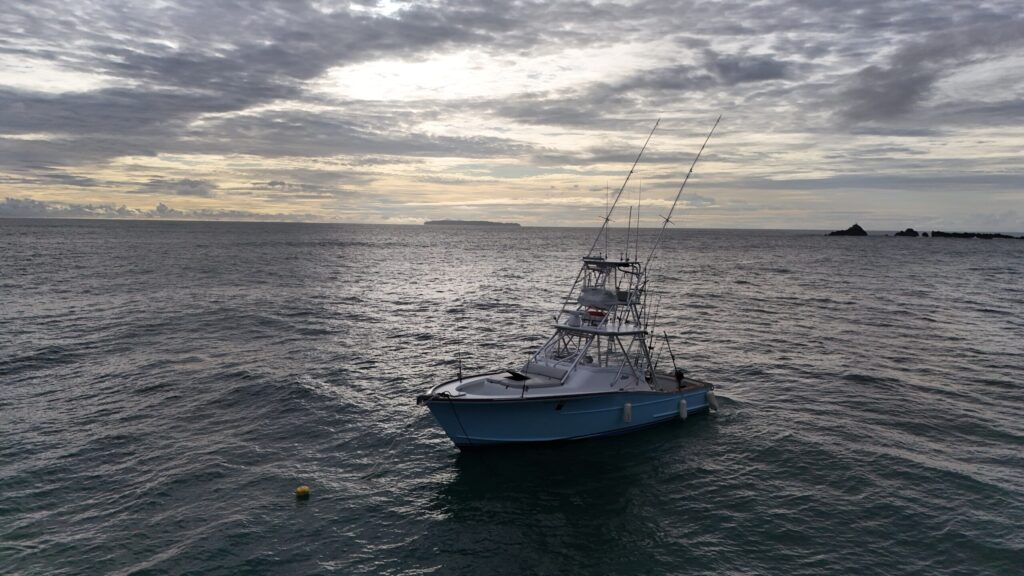
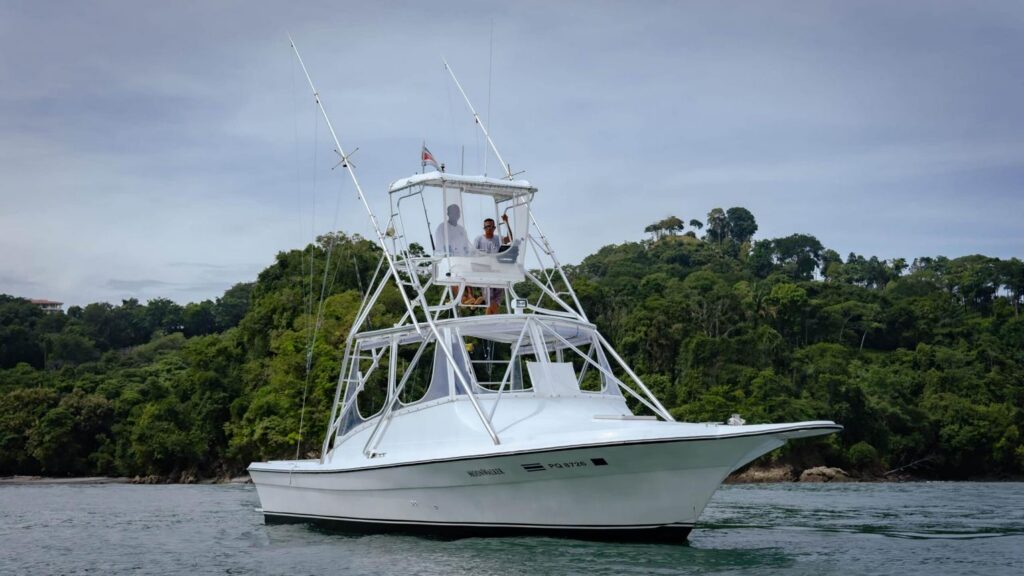
Offshore Sport Fishing Boats Designed for blue water fishing where sailfish, marlin, mahi mahi, and yellowfin tuna are the main targets. These boats typically include:
- 28 to 60 feet in length
- Tower or hardtop for visibility
- Outriggers for spreading multiple trolling lines
- Fighting chairs or stand up rod holders
- Live bait wells and refrigeration
- Twin engines for range and stability
Most offshore charters in Costa Rica use center console, express, or convertible style sport fishers.
Inshore Fishing Boats Used for targeting species closer to shore such as roosterfish, snapper, jack crevalle, and snook. These vessels are smaller, more maneuverable, and adapted to coastal conditions. They generally feature:
- 23 to 28 feet in length
- Outboard engines
- Open layout for casting
- Light tackle setups
- Shallow draft for rocky or coastal areas
Pangas Traditional open boats widely used along the Costa Rican coast for inshore and light tackle fishing. They are simple, efficient, and ideal for shorter trips or targeting structure oriented species.
Explore the fleet: https://charterfishingcostarica.com


Gear and Tackle: Matching the Fishery
The gear used in Costa Rica is selected to match the target species and the technique applied. While professional captains adjust setups daily, several standard categories define what anglers will encounter.
Offshore Tackle Used for billfish, tuna, and large pelagic species. Typical setups include:
- 30 to 80 pound class conventional reels
- Stand up or chair rods for heavier fish
- Monofilament or fluorocarbon leaders
- Circle hooks for conservation
- Trolling lures, ballyhoo, and live bait
Inshore Tackle Lighter setups built for finesse and reactivity. These include:
- Spinning reels in 4000 to 8000 size
- Medium action rods
- Braided line with fluorocarbon leaders
- Topwater plugs, poppers, and jigs
- Live bait such as sardines and bonito
Fly Fishing Gear Costa Rica is also recognized as a top destination for offshore fly fishing, particularly for sailfish. This requires specialized equipment including 12 to 14 weight rods, large arbor saltwater reels, and teaser systems used to bring fish within casting range.
Techniques Used in Costa Rican Waters
The techniques applied in Costa Rica reflect decades of experience and a strong conservation oriented approach.
Trolling The most common offshore technique. Lures or baits are pulled behind the boat at controlled speeds to attract pelagic species. Spreads typically include four to seven lines positioned with outriggers to cover a wide area.
Live Bait Fishing Highly effective for billfish, tuna, and large pelagic species. Live bait is hooked carefully and presented in a natural way to trigger strikes. This technique is especially productive during sailfish season.
Casting and Popping Used inshore for species like roosterfish and jack crevalle. Anglers cast topwater plugs or poppers near rocky structures, generating aggressive surface strikes.
Jigging Effective for tuna, snapper, and amberjack. Vertical jigs are dropped to specific depths and worked back to the surface with rhythmic movements.
Teasing for Fly Fishing A specialized technique where hookless baits or lures are used to draw billfish close to the boat, allowing the angler to present a fly. This method requires precise coordination between captain, mate, and angler.
Conservation as Part of the Technique
Sport fishing in Costa Rica operates under strong conservation principles. Catch and release is standard practice for billfish, and circle hooks are widely used to reduce injury and increase survival rates. These practices have helped Costa Rica maintain its reputation as a sustainable sport fishing destination over the long term.
Learn more here: [Conservation or Sustainability page]
How the Crew Shapes the Experience
The boat, gear, and technique are only part of the equation. The experience is shaped largely by the captain and mate, whose role includes:
- Reading water, birds, and conditions
- Selecting the right technique for the day
- Rigging baits and managing the spread
- Coaching anglers through the fight
- Ensuring safety and proper fish handling
In Costa Rica, many crews have decades of experience on the same waters, which translates into highly productive trips even on challenging days.

Choosing the Right Setup for Your Trip
The right combination of boat, gear, and technique depends on what each angler is looking for. Travelers planning a fishing trip in Costa Rica typically consider:
- Target species and season
- Group size and experience level
- Offshore versus inshore preference
- Trip length and travel logistics
- Conservation values
A professional charter operation aligns these factors with the right vessel and approach, ensuring a productive and enjoyable day on the water.
Explore the trips: https://charterfishingcostarica.com/costa-rica-fishing-adventure/
Plan your charter here: https://charterfishingcostarica.com/our-charters/
Why It All Matters
Sport fishing in Costa Rica is not just about catching fish. It is about the combination of equipment, technique, and local knowledge that turns each trip into a refined and memorable experience. Understanding how the fishing is done is the first step toward making the most of one of the best sport fishing destinations in the world.